When did we begin celebrating Mother’s Day?

Anyone with a mother (biological or otherwise) knows how amazing they are. Mothers should never be taken for granted, yet they often are throughout the year. Thank goodness there’s Mother’s Day.

Now take a moment to think about not having a Mother’s Day. Seriously, think about it. At one point the Day didn’t always exist. So, who do we have to thank for bringing Mother’s Day to us?

GREECE AND ROME

In ancient Greece they celebrated a goddess related to motherhood. A spring festival celebrated Rhea, who was believed to be the mother of the gods of Olympus. In Rome spring festivals celebrated Magna Mater (The Great Mother).

Pink Carnations. Photograph by Kirsten Jerry.

JULIA WARD HOWE

The author of “The Battle Hymn of the Republic” wanted to make a Mother’s Peace Day. Julia Ward Howe had a vision of a day for mothers of all nationalities getting together and discussing how to achieve world peace. It would’ve been in June. She made her Mother’s Day Proclamation in 1870, and the idea of a Mother’s Day spread.

ANNA JARVIS

Anna Jarvis is known as the Mother of Mother’s Day. Her own mother, Anna Marie Jarvis, expressed a wish for a day to honour mothers. When Mrs. Jarvis died in 1905 Anna Jarvis (jr) became determined to pay homage to her. She launched a campaign for a National Mother’s Day in 1907.

Gift wrapping materials for Mother's Day. Photograph by Kirsten Jerry.
Gift wrapping materials for Mother’s Day. Photograph by Kirsten Jerry.

The idea wasn’t accepted at first. When it gained the support of John Wanamaker, a merchant and philanthropist from Philadelphia people started to take an interest. Forty-five American states, Canada and Mexico celebrated Mother’s Day in 1909. Almost every state was celebrating it by 1911. President Woodrow Wilson proclaimed Mother’s Day as a national holiday in 1914, to be observed every second Sunday of May.

Despite this victory, Anna Jarvis was unhappy. The commercialization of the holiday upset her, and she protested against it fiercely. This fight is believed to be the main reason Anna Jarvis lost all her money. She died in a sanatorium in 1948. She was 84 and was buried beside her mother.

AROUND THE WORLD

Mother’s Day has a different name, or date in other countries. The origins of this celebration differ as well. Below are few examples of how Mother’s Day in other countries.

UK – Mothering Sunday

Mother’s Day in the UK originated in the Middle Ages. Children left home to earn money for their families. They were allowed to return home (to mother) on the fourth Sunday of Lent, thus eventually starting Mothering Sunday.

France – Fêtes de Mères

A Mother's Day card my sister once made. Photograph by Kirsten Jerry.
A Mother’s Day card my sister once made. Photograph by Kirsten Jerry.

In 1918 a celebration began to be held honouring mothers who had several children in the hopes of increasing the population. The day gained publicity during the Vichy regime and after the liberation of France. It is held on the last Sunday of May, unless Pentecost happens to be on the same day. Then it moves to June.

Russia – International Women’s Day

Russia celebrates a different sort of Mother’s Day on International Women’s Day. This way they can celebrate all the amazing women in their lives, including mothers.

India – Durga Puja

While India has similar Mother’s Day celebrations to those in the US and Canada, Hindus also celebrate Durga Puja in October. Durga Puja celebrates the goddess Durga aka the Divine Mother in a ten-day celebration involving song, dance, cultural dramas, fasting, feasting and prayer.

MY THOUGHTS

I can’t help feeling sad for Anna Jarvis. She must’ve felt like her dreams were going down the drain, not to mention her mother’s. It’s a sad ending to an otherwise happy story. Thanks to women like Anna Jarvis we have a day to set aside for Mom, which is perfect because let’s face it moms put aside many things and many days for our benefit.

What is your favourite Mother’s Day memory? Let me know in the comments! I personally can’t pick one. I just enjoy knowing that my mom knows how much her hard work is appreciated.

CONCLUSION

Mothers deserve to be celebrated. It makes sense that they have their own special day, but let’s not keep our love for the mothers in our lives to only one day. Whenever you celebrate Mother’s Day don’t forget to show your appreciation throughout the year.

Where did the Easter Bunny come from?

A short while ago, we celebrated Easter. Despite the COVID-19 crisis, chocolate eggs and bunnies were still sold for this springtime holiday, often represented by a bunny. But what does a bunny have to do with Easter and why the eggs?

Well, the answer isn’t a simple one. There are a few different theories about the bunny’s origins. I will list them as I came across them.

THEORY 1

One theory as to why we have the Easter BUNNY begins in Germany. Der Osterhase (the Easter Hare) was a German tradition. Der Osterhase (Aw-stir-haws-A) hid colourful eggs for children to find. Does that sound familiar?

When German immigrants traveled to Pennsylvania the tradition was brought to America. Over time the hare turned into a bunny. First nests were made to tempt the bunny to hide his eggs, then baskets.

THEORY 2

Bunny stuffies. Photograph by Kirsten Jerry.

The goddess Eostre is theorized to be the origin of the holiday’s name. Eostre was the goddess of dawn and fertility. She was associated with rabbits, eggs, and other symbols of spring. Unfortunately, not much is known about her.

The feast celebrating Eostre likely occurred around the spring solstice. One way or another overtime the Easter Bunny was celebrated instead overtime. I’ll mention how the Bunny may have come from the goddess more later.

FUN FACT: Easter baskets may have their origins with Eostre as well. People used baskets to carry seedling offerings to her and Eostre was depicted with a basket of eggs.

THEORY 3

The last theory I found had to do with the Virgin Mary. She was the mother of Jesus, giving birth to Him through God’s power while still a virgin. Easter is the Christian celebration of Jesus’ resurrection after His death on the cross.

Rabbits have been painted alongside Mary. Rabbits were believed to be able to self-impregnate and became symbol of purity. This belief came about because people didn’t realize female bunnies can become pregnant WHILE they are already pregnant, which made the appearance of a second litter mysterious to them.

WHY DOES THE EASTER BUNNY LAY EGGS?

The Easter Bunny’s special abilities trace back to Eostre or Ostara (some sources say these two are the same goddess, while other indicate Ostara was made up by a Grimm brother. I’m unable to determine which is true at this time. Please let me know if you know).

Easter Bunny figurine. Photograph by Kirsten Jerry.

The basics of this legend are as follows: the goddess finds an injured bird while she brings spring to the earth. Feeling sorry for the bird she turns it into a hare or rabbit. The hare/rabbit is still able to lay eggs and lays them every year on her feast day.

MY THOUGHTS

Honestly, the Easter Bunny is fun but strange. I’ve always imagined the Bunny as being male, yet it lays eggs, which is weird enough since bunnies don’t lay eggs, and then he’s okay with everyone eating them. Even with the bird-to-bunny legend this doesn’t work, because male birds can’t lay eggs. (Did anyone else grow up with a film about Peter Cottontail that came on every year?)

I was hoping my research for this post would answer some of my questions, and it did somewhat, but not totally. For example, I still don’t have a solid answer about where he came from. Also, I haven’t been able to figure out how the rabbit is a symbol of purity AND fertility. One or the other I’d understand, but not both.

Do you have further questions or information about the Easter Bunny? Please let me know in the comments!

CONCLUSION

This is Munchie (a stuffie bunny) with an Easter egg. Photograph by Kirsten Jerry.

Why is there an Easter Bunny? Well, he was either German, associated with a fertility goddess or the Virgin Mary. Only the bunny knows for sure!

In the end, we get our chocolate Easter treats, and an egg hunt to enjoy. Wherever the Easter Bunny came from, he brings some added fun to the celebration of Jesus’ resurrection, or spring as the case may be. The Easter Bunny should be appreciated as what he’s now become; the jolly, chocolate egg hiding bunny, who brings us a little more fun for our Easter celebration.

Who invented glasses?

The stereotypical symbol of intelligence, nerdiness, or sometimes both, glasses have been around for what seems like forever. The thing is, they had to come from somewhere – no, not the store, not the manufacturer, before that.  Think MUCH before that.

Many people rely on their spectacular spectacles to make it through the day. Depending on their eyes, they couldn’t do certain things like drive, read, or see much at all. So, who ever thought to put lenses in frames in the first place? The answer to that question begins without either.

READING STONES

Around 1000 AD, the first visual aid device was in use. These are known as reading stones. They were placed over text and magnified the words for the reader. The stones were made through a grinding process, which had been the theoretical findings of Alhazan in the 11th century. Now people could read better as they aged, but there still weren’t any glasses.

VENICE

Frog glasses holder. Photograph by Kirsten jerry.

Glass blowers in 13th century Venice Italy made solid glass reading stones set in a wood or bone frame. The frame held one lens and was hand-held. These stones looked like modern magnifying glasses.

 It is believed that the first wearable glasses were made in Venice or Pisa around 1284. The spectacles were made of leather, metal or bone. They were shaped like two small magnifying glasses attached together at the end of their handles and balanced on the wearer’s nose.

SALVINO D’ARMATI

Some believe Salvino D’Armati of 13th century Florence Italy is the true inventor of glasses, but others do not. An inscription was found in 1841 in the church of Santa Maria Maggiore on D’Armati’s grave states that he invented spectacles. However, many historians doubt D’Armati was the inventor. Even so, it’s possible that someone in Italy was the inventor of glasses as there is evidence that 13th century Italians used spectacles.

Early 80s glasses. Photograph by Kirsten Jerry.

BENJAMIN FRANKLIN

Some people believe Benjamin Franklin invented glasses, but he didn’t. Franklin invented bifocals in the 1700s. He cut a lens in half.  He placed the part for nearsightedness on top, and the part for farsightedness on the bottom. Nearsightedness is seeing only what’s close to you clearly, while farsightedness is the opposite.

FRAMES HISTORY

The earliest glasses frames were made of leather, bone, horn or wood and had no arms (the part that goes around the ear. Also called the temple). Leather frames were around from the 16th to 18th century. Pince-nez glasses, which are held in place by a nose clip, were popular until they became linked to the elderly.

Four old pairs of glasses. Photograph by Kirsten Jerry.

Later frames were crafted of baleen, steel, tortoiseshell, silver or gold. Lenses and thus frames went from being made in a round shape to oval, then rectangular in the 1830s. Plastic frames became available in the 1980s. These frames are more durable than previous ones.

MY THOUGHTS

My glasses hanging up. Photograph by Kirsten Jerry.

I’m grateful for the invention of glasses personally because I need them to see. I am VERY near sighted. Technically I could wear contacts, but I’m a major klutz so I’d probably injure my eyes instead of helping them if I did, so I’ll stick with my specs, thanks. Besides, it is amazing how much work, science and theory has gone into the creation of my glasses.

As I mentioned at the beginning of this post, glasses stereotypically seen as a symbol that a person is either smart or nerdy. I don’t see it that way. Glasses mean one thing: they need glasses. Or they should mean that.

I can’t stand it when people wear glasses for fashion and nothing else. GLASSES ARE NOT FOR FASHION THEY’RE FOR YOUR EYES! How do you feel about it? Let me know in the comments!

CONCLUSION

It took centuries for the specs we now know to be invented. These useful visual aids help people like me survive daily life. Without them, many things are impossible, like driving for example.

Without the innovations of the past many people would be struggling to perform everyday tasks. Instead, glasses are another little part of life. What is commonplace to us now, was once unheard of, and I am grateful for my commonplace piece of life, that the innovators and inventors of the past have made possible.

Why do we celebrate St.Patrick’s Day?

Everywhere you look there’s something green, and I don’t mean the grass. St. Patrick’s Day has just passed but do you know why this celebration exists? Of all the things to celebrate why would we celebrate St. Patrick?

The answer to that question begins, not surprisingly, in Ireland. However, this holiday isn’t just celebrated there anymore. The answer of why March 17 is a holiday in general goes beyond The Emerald Isle.

WHO WAS ST. PATRICK?

Born in Britain to a Romanized family, Patrick was taken to be a slave in Ireland at the age of 16. He was enslaved for six years. Then he had a dream telling him the ship he would escape on was ready. Taking that cue, he ran away from his master and escaped back to Britain, eventually reuniting with his family.

Afterwards, Patrick had another dream in which he was given a letter called “The Voice of the Irish,” as chronicled in the saint’s book, the Confessio. As Patrick read the letter, he heard the Irish calling for him to be with them again. It moved him so deeply he had to stop reading.

At first Patrick didn’t think he was the right person for the job. However, when he did go back to Ireland, he never tired of his quest. He trusted in God despite the danger he was in from non-Christians.

Among other legends told about the saint, it is said that he used the shamrock to explain the trinity to non-believers and wore one pinned to his clothes. Now Patrick is the Patron Saint of Ireland. It is believed St. Patrick died on March 17 around 485 AD which is why the celebration falls on that day. It was accepted as a holy day by the Vatican in 1631.

AMERICA AND CANADA

St. Patrick’s Day is celebrated all over the globe, but for the purpose of this post (and lack of room) I’m focusing on America and Canada. The first St. Patrick’s Day in America happened in Boston in 1737. Rich members of the Irish community threw a celebration for new Irish immigrants. New York held their first St. Patrick’s Day parade in the 1760s.

In Canada, Montreal held the first parade in 1824. Toronto banned its parade in 1878 after violence broke out between Protestants and Catholics. It wasn’t until 1988 that Toronto had another parade. In 1903 Ireland began having a parade also. Some parades were cancelled this year because of the coronavirus.

WHY GREEN?

Among the many reasons green is the colour used for St. Patrick’s Day is that Ireland is green. Known as the Emerald Isle, Ireland has lush green landscapes. To celebrate the Irish, someone chose the colour of their land.

Another reason for all the green could be that the saint died in the spring. New green plants grow in spring.  Since Patrick died in March it makes sense that the celebration marking it is full of greenery, even though the original colour in Ireland was blue.

New spring grass. Photograph by Kirsten Jerry. (Okay, so maybe I did mean the grass after all).

MY THOUGHTS

St. Patrick’s Day is a fun time to get together with friends, wear green and celebrate Irish culture. While there is defiantly more to Irish culture than drinking green beer and wearing shamrock sunglasses, it’s good to be reminded of other cultures, or to have a time to celebrate your own (if you are Irish).

The unfortunate side is that selling vibrant green merchandise buries the intention for this holiday. Especially considering that in Canada (where I am) it’s not a bank holiday.

Legend says if you don't wear green on St. Patrick's Day, you could get pinched by a leprechaun. Photograph by Kirsten Jerry.
If you don’t wear green on St. Patrick’s Day, you could get pinched by a leprechaun. Photograph by Kirsten Jerry.

It’s honestly disappointing how little attention it can bring to actual Irish culture. Yes, there are celebrations and parades, but they always seem more like an excuse to party than a celebration of Irish culture. What do you think about the St. Patrick’s Day celebrations where you live? Let me know in the comments!

CONCLUSION

Amid the sea of vivid green shirts and shades there’s a hidden story of faith. St. Patrick is legendary and thankfully the celebration with his name on it is famous throughout the world. Next year, remember this celebration is more than just a day to wear green, but a celebration of culture, history and faith.

Who invented Fudge?

What do caramels, college, and ice cream have in common? You guessed it; fudge! If you have a sweet tooth, odds are you love fudge. This sweet treat is easy to find on store shelves or as a recipe. 

It’s hard to imagine not having fudge, but once upon a time there wasn’t any. So which confectionary wizard brought us fudgy magic? The truth is, there are theories, but the true origin of fudge is unknown.

BEFORE FUDGE WAS CANDY

Before fudge was a candy it meant something completely different. It might have been altered version of the word ‘fadge’ from the 1500s. ‘Fadge’ meant to something fit together well.

In the 1700s ‘fudge’ meant that something was put together badly or was nonsensical or annoying. So basically, ‘fudge’ was the opposite of ‘fadge’.

This may explain why ‘fudge’ is sometimes used in place of swear words. It also meant dishonesty, possibly because of it’s association to Captain Fudge, who had such a reputation for dishonesty that he was sometimes referred to as ‘Lying Fudge.’

CARAMEL

Maple fudge. Photograph by Kirsten Jerry.

The most popular theory about fudge’s origin begins in America. Some historians believe fudge – the treat we all know and love – was invented on February 14, 1886. Chocolate caramels had existed since the 1860s, and someone was trying to make a batch when they made a magical mistake.

The caramels went wrong, but the result was delicious. Fudge was born! Just think, without this happy accident fudge might not exist. (Okay, the confectioner was NOT a wizard but that turned out great for us!)

COLLEGE

Emelyn Battersby Hartrige’s letter became the first documentation of fudge. She wrote about a schoolmate’s cousin who made fudge in 1886 in Baltimore and got the recipe. In 1888 Hartridge made 30 pounds of the sweet treat for the senior Auction at Vassar College in New York.

The fudge is said to have been such a hit that Vassar students for years after would try to cook it over alcohol stoves or redirecting gas from their lamps in their dorm rooms. The colleges Wellesley and Smith later made their own fudge recipes.

HOT FUDGE AND ICE CREAM

Remember when I mentioned there was a time when no one had fudge? Imagine a time without ice cream sundaes with hot fudge poured on top. Before 1906, this treat was non-existent.

Warm  chocolate fudge in a pot.
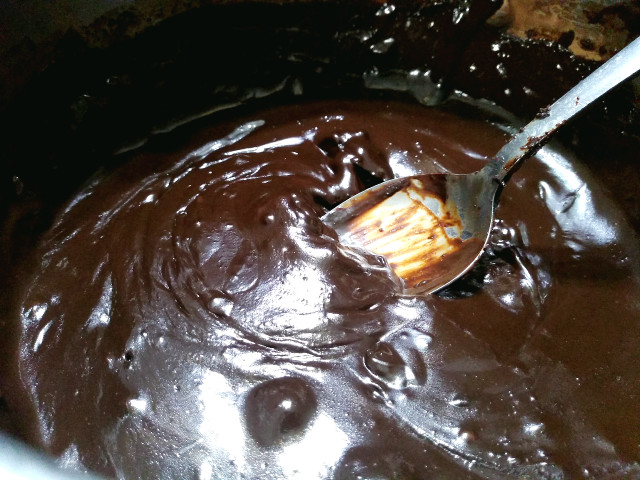
Warm chocolate fudge in a pot. Photograph by Kirsten Jerry.

The credit for inventing the hot fudge sundae goes to CC Brown’s, an ice cream parlour on Hollywood Boulevard. Instead the usual syrups CC Brown’s poured hot, undercooked fudge over their sundaes and a new dessert was invented.

MY THOUGHTS

Is it just me, or should every college have a signature fudge? Seriously, fudge is so fantastic and college can be stressful, so why not kick back and enjoy the college fudge? Or each academic success could be rewarded with the magical goodness of fudge. Food’s the best kind of motivation.

Heading back to 1886 for a sec, I gotta say (assuming that theory is correct) that’s possibly the best mistake in history. Don’t get me wrong, I love caramels too but hey! we have fudge now, so that was a beautiful mistake. It’s also a reminder that mistakes can be good things.

What is your favourite accidental invention? Let me know in the comments!

CONCLUSION

Maple fudge in wrappers. Photograph by Kirsten Jerry.

Who invented fudge? Long answer: we’re not totally certain, but most people think it was the Baltimore confectioner, with the later help Emelyn Battersby Hartrige, who grew its popularity.

Short answer: probably some confectioner in Baltimore in 1886 who messed up in the best way. Remember that next time you ‘fudge up.’

However it happened, the accidental invention of fudge changed the world candy forever. Whether it’s store-bought or made at home, fudge is a delicious sweet treat for everyone to enjoy. Next time you’re enjoying some fudge just think how we might not have it, except for one little mishap.

Why do we use shampoo?

Ah, shampoo. It’s foamy, smells great and it cleans the grime off your scalp; but why do we use it, really? People must’ve been able to clean their hair before shampoo so why use it? To answer that question, we’re travelling through history. Shampoo has a story originating in ancient customs, travel and sales.

INDIA AND BRITIAN

While hair care and bathing habits can be traced back to at least 4000 BC, this post begins in India around 1762. Ancient tribes in India used a process they called champo, which involved massaging their heads with hair oil. Essentially, this is where the word shampoo came from.

Bengali entrepreneur, Sake Dean Mahomed began practicing champo and set up business in Brighton in 1814 with his wife. Mahomed gave clients therapeutic massages in his steam vapour and medicated bath house. He was eventually appointed as Shampoo Surgeon to William IV and George IV. Shampoo came to mean washing the hair and scalp instead of just massaging in the 1860s.

Photograph by Kirsten Jerry.

GREMANY

Hans Schwarzkopf, a chemist in Berlin, opened a drugstore in 1898. The store was focused on perfume and Schwarzkopf focused on creating hair products. He came up with a powder shampoo in 1903. Unfortunately, it left hair dull and sometimes caused alkaline reactions. In 1927 Schwarzkopf established liquid shampoo in Europe.

ADVERTISING – BRECK SHAMPOO

By the 1970s, shampoo ads featuring famous people were promoting the use of shampoo on a weekly basis. Advertisements like those are responsible for the wide use of shampoo.

Photograph by Kirsten Jerry.

A 1930 example of shampoo advertising is for Breck Shampoo. The ads featured smiling women known as Breck Girls.  From 1936 and 1976 there were 200 Breck Girls, some of whom are well known, such as Farrah Fawcett, Cheryl Tiegs and Brooke Shields.

It wasn’t until the late 80’s that any Breck Girl was represented as a career woman. African-American Breck Girl Dr. Donna Alexander later became the Cook County Department of Animal and Rabies Control Administrator. She died in 2018.

DRY SHAMPOO

Let’s take a short detour to the 15th century. The people in Asia already used clay powders to clean their hair. Everyone else took their time catching on.

Now let’s jump to the late 1700s.The latest fashion trend? Wigs. Washing them wasn’t the cleaning solution people decided on.

This is where the powder comes in. Scented powders of ground starch were used on the wigs, and sometimes women also used it in their natural hair. Most powder was white but some more adventurous women used colours.

The first product sold as a dry shampoo was called Minipoo. It was advertised for women to be used when sick in bed or before a surprise date. It was made from the 1940s to the 1960s.

MY THOUGHTS

Photograph by Kirsten Jerry.

I’m not a make-your-own-shampoo girl, so I’m glad there are products out there made for cleaning and detangling my hair. I’m hoping by now that there are affordable options for every hair type (and I have to say if there aren’t the shampoo companies had better get their act together already). Have you ever had trouble finding the right hair care product?

I also find the idea of naming your brand Minipoo to be not such a great one. It makes sense form the view that it’s a partial shampoo job, but the words ‘mini’ and ‘poo’ should really not be together in my opinion. It doesn’t sound like a hair product. What do you think? Let me know in the comments.

CONCLUSION

Shampoo is an everyday product with a complicated past. From the Ancient tribes of India, to England, through German chemistry, Asian clay, powdered wigs and a drive to sell, we have the right product for the job, liquid or dry.  But why DO we use it?

Essentially, we use shampoo because we’re sold it. We use shampoo because entrepreneurs decided it was something we needed, and salespeople decided to advertise it. On top of that of course we want to be clean and have nice hair. Thanks to those clever ads, we can usually find what we’re looking for.

The Tooth about Braces

Braces are a common bit of orthodontic life. If you haven’t worn braces (like me) you’ve talked about them at some point. It’s true that not everyone needs braces to be healthy, but some people do need them.

They can help stop sucking habits which can cause problems with your bite and sinuses among other issues. Braces can also be a part of treating temporomandibular joint syndrome, the inflammation or injury of the Temporomandibular joint which connects the jaw to the skull.

THE DEAD

Early examples of braces were found on the teeth of ancient Egyptian mummies. They used a cord of animal hide fastened to the teeth, known as catgut.

Photograph by Kirsten Jerry.

Ancient Greeks and Etruscans used a device similar to a mouthguard around 1000 BC. It was used to keep the teeth in place after death and protect the body. The guard was part of a ceremony that prepared the body for the afterlife, researchers believe.

Archeologists have found roman burials that included a small gold ligature wire wrapped around the person’s teeth. It’s believed the wire may have been used for moving crooked teeth.

PRESSURE

The first recorded effort for straightening the teeth of a living person comes from Rome. Aulus Cornelius Celsus tried moving his teeth by pressing certain points with his fingers and claimed to have success over time.

DENTISTRY BOOKS

In Pierre Fauchard’s book published in 1728, “The Surgeon Dentist,” he wrote about something called a Bandeu. It was used to keep the arch of a patient’s mouth and teeth in a natural position.

Photograph by Kirsten Jerry.

In 1757, Pierre Bourdet was dentist to the King of France and published his own book “The Dentist’s Art.” He improved the Bourdeu and discovered that back wisdom teeth could be removed from the mouth to make more room. Crowding can still cause crooked teeth in adults.

CREATION

Over the years braces have gone through many changes. In 1819 the first wire cribs were created by Christophe-Francois Delabarre. They were shaped in semi-circles and attached to the teeth, to hopefully keep the teeth in place.

 In 1843 elastics were added by Dr. Edward Maynard to help jaw alignment.  E.J. Tucker made the braces more comfortable to wear by using rubbing tubing in 1850. In 1864, Dr. S.C. Barnum created the dental dam, which prevents damage to the gums while fitting braces, and has helped with further development of braces.

In 1893 Henry A. Baker combined the rubber tubing and wire crib, which meant dentists didn’t need to remove teeth to fit the device in a patient’s mouth. The term ‘braces’ was first used in the 1900’s.

Eventually, bands were wrapped around each tooth, attached to a wire and tightened to make adjustments over time. Dentists used what they could get their hands on for these braces, but gold was always popular and still is for some procedures. In the 1970’s stainless steel became available and dentists began using adhesives, shortening the length of time needed for wearing the braces.

Photo illustration by Kirsten Jerry.

3D

In 1997 Zia Chishti and Kelsey Wirth created a system of invisible liners. Chishti realized his teeth shifted without the use of his retainer. He began working with Wirth to make a system of 3D-printed aligners.

It starts with photos of the patient’s mouth, and a custom printed aligner. Over time more photos and aligners are used to shift the teeth into the correct position. Wirth and Chishti made they’re product available in 2000. We know it as Invisalign.

MY THOUGHTS

Courtesy of Freerange Stock.Photo illustration by Stuart Miles.

I never wore braces, so I don’t know how painful they are, but it always sounded nasty. Anyway, I was surprised at how long people have been using some type of braces. Honestly, the last place I expected to hear about in my research was ancient Egypt and Greece. How old did you think braces were before reading this?

CONCLUSION

It was good enough for ancient Egyptian mummies and it’s still good enough for many of us. Yes, we no longer use cat gut on our teeth, but we still desire straight teeth both for aesthetic and medical reasons. As usual the people of the ancient past were on to something and the people after them worked to improve it.

Easy as…Food?

A look at some common expressions

Let’s be honest, we say several weird things. For now, let’s look at some ways we say, “Oh, it’s easy!” with food and why. Where did these expressions come from?

LEMONS

Calling a lemon easy doesn’t seem to work, yet the phrase ‘easy peasy lemon squeezy’ is a common phrase. It’s true squeezing lemon juice isn’t the hardest thing in the world, but it’s not the easiest thing either.

A common theory is that the phrase originated as a slogan for Sqezy. The washing-up liquid, as it was called, was made by Domestos Ltd., created somewhere from the 1950s to the 1970s.  However, according to word histories, their ad slogans revolved around the phrase, “It’s easy with Sqezy,” instead.

Three lemons on wood.
Why do we say ‘easy peasy lemon squeezy?’ Photograph by Kirsten Jerry.

One of the earliest occurrences of ‘easy peasy lemon squeezy’was in The Guardian on June 21, 1983 but spelled differently (peezy). The Oxford English Dictionary says the exact phrase ‘easy peasy lemon squeezy’ is first recorded from The Independent on October 29, 1990. Exactly why we say it is, sadly, not clear.

OPPOSITES

Options for an [i]opposite of this phrase are not very popular, though there are more than I expected to find. Here’s a list of my favourites:

  • ‘Stressed depressed lemon zest’ (this is the most popular of the ones I found)
  • ‘Drudgy trudgy orange smudgy’
  • ‘Hardly the best lemon zest’
  • ‘Simple dimple mushroom pimple’
  • ‘Gnarly parley fodder barley’

PIE

Pie is not easy to make. Pie crust especially is finicky to make, yet ‘easy as pie’ is another common phrase. But why?

Many people believe this phrase has to do with how easy it is to EAT pie, instead of making it. This theory has merit. ‘Easy as pie’ originated in 19th century America, where it was common for ‘pie’ to represent ease or pleasure. Examples of ‘pie’ as pleasant can be found in the book Which? Right or Left? published in 1855, and throughout Mark Twain’s The Adventures of Huckleberry Finn.

An apple pie.
Courtesy of Freerange Stock.

OPPOSITES

Despite its representing pleasant things, there are some negative idioms referring to pie. Here are some examples:

  • ‘Eat humble pie’
  • ‘Pie in the sky’
  • ‘Pie-eyed’
  • ‘Have your fingers in too many pies’
  • ‘Pie eating grin’

CAKE

At last, some cake! Cake is not predicable. All is well, the recipe is followed to the letter, yet it doesn’t rise, or the middle isn’t cooked, but the edges are, or it comes out a weird shape. I know for some people making cake is simple, but not for everyone.

‘A piece of cake’ is another common phrase, used to say something was easy. Like pie, ‘cake’ was used to represent pleasant things. The earliest written example of ‘a piece of cake’ can be found in Ogden Nash’s Primrose Path from 1936.

This phrase is believed to have originated in the 1870s when cakes were used regularly as prizes for competitions. Another theory is that this phrase is tied to another. ‘A cakewalk,’ originated as slave practices in some parts of America.

A piece of cake and a fork on a white plate.
Courtesy of Freerange stock.

Slave couples would dance together in a way that mocked their masters. They’d make fun of the stiff ballroom dances of the time and mix in their own dance moves. The most elegant couple would receive cake as their reward.

OPPOSITES

Once again, the pleasant food is somehow used in a negative manner. These phrases include:

  • ‘Your cake is dough’
  • ‘You can’t have your cake and eat it too’
  • ‘Nutty as a fruitcake’
  • ‘That takes the cake’ (can be positive also)
  • ‘Sit like piffy on a rock cake’ (from the UK)

MY THOUGHTS

I think it’s fascinating how some things are associated with ease while others aren’t. On the other hand, I enjoy how the same word can be given a negative connotation. It’s all in the context, don’t you think? What is your favourite expression? Let me know in the comments.

CONCLUSION

While food itself may not be easy, using these simple expressions is. We use these food expressions because they exist. Somewhere in the past, someone made them up. Each phrase can teach us about a tiny piece of the past.


[i] What is the opposite of “easy peasy lemon sqeezy”?, n.d.Quora.com. Retrieved January 10, 2020, from https://www.quora.com/What-is-the-opposite-of-easy-peasy-lemon-squeezy

easy peasy lemon squeezy. (n.d.). Synonyms.com. Retrieved January 10, 2020, from https://www.synonyms.com/antonyms/easy+peasy+lemon+squeezy.

The Evolution of Mac and Cheese

The noodles, the cheese, the comfort food to top all comfort foods. Macaroni and cheese is favourite dish in almost every home, at any age. But how did it come into our homes in the first place?

ITALY

To begin with, Italy was involved. The earliest macaroni and cheese recipe found to date is written in Latin in a medieval cookbook called the Liber de Coquina. The author of Liber de Coquina is believed to be from around Naples.

This dish is not the one we’re used to eating. There is no powdered cheese or cheese sauce. The recipe calls for macaroni noodles with grated cheese tossed in. That’s it. But how did that change to the dish we have today?

PUDDING

Macaroni pudding is said to be a dish from New England. It is like a rice pudding but replaces the rice base with macaroni. Popular at church suppers, some theorise that it is the forerunner for the dish we enjoy today. When it was made macaroni was a straight noodle, not the elbow bend noodle we use today. Macaroni pudding traveled well, was cheap and easy to make.

Macaroni used to come in straight lengths, not the in the shape we use today. Photograph by Kirsten jerry.

THOMAS JEFFERSON

Many credit Thomas Jefferson with popularizing mac and cheese. He came across it in his travels to Paris and Italy. Of course, he loved it. In 1793 he sent for a machine that made the pasta. He later chose to import the noodles and the parmesan cheese.

Using parmesan cheese is credited to Jefferson’s cousin, Mary Randolph. Randolph was known as an excellent hostess and cook, so her inventing a delicious recipe isn’t a stretch.

JAMES HEMMINGS

A less popular story in the history of mac and cheese is that of slave James Hemmings. Hemmings was the half-brother of Martha Wayles, who became Jefferson’s wife. After the marriage, Hemmings passed from the Wayles family to Thomas Jefferson’s.

Jefferson brought James Hemmings along on a trip specifically so Hemmings could be taught about French cuisine. Hemmings is credited with bringing the European-style macaroni and cheese to America along with other favourites such as ice cream and French fries.

THE DEPRESSION

During the depression food was hard come by. So, when Kraft came out with their boxed mac and cheese in 1937 it was a Godsend. Powdered cheese had already been invented in 1918 to extend shelf life.

The boxes of Kraft mac and cheese were an affordable meal in a time when no meal was affordable. Remember, this was during the Great Depression and people lined up for hours to get some soup. The Kraft product could feed about four people. Savvy housewives would add bits of meat or vegetables to create variety. 

Kraft’s product sold over 8 million boxes in the first year of production alone. Photograph by Kirsten Jerry.

WARTIME

While soldiers fought in World War 2 the people back home had to ration their food. Fresh meat and cheese were hard to find, and ration cards wouldn’t get much. One ration stamp could buy two boxes of mac and cheese.

Two boxes could feed up to eight people in one go. This easy-to-make food contained carbs, protein and essential calories.

WORKING WOMEN

In the 60s and 70s when women began to enter the workforce, they had less time for preparing meals. Good old boxed mac and cheese was (and is) easy and fast to make. If mommy wasn’t home to make supper, someone else could easily make some macaroni and cheese for themselves.

MY THOUGHTS

I love macaroni and cheese! It’s delicious. I can’t remember the first time I had macaroni and cheese, because it seems like I’ve ALWAYS been eating it. Does anyone else feel that way?

I was surprised at how old the recipe is. Did you know historians have traced mac and cheese back to the thirteenth century? No wonder it feels like I’ve been eating it forever!

Nowadays new twists are added to the mac and cheese recipe in the gourmet world like different noodles, seasonings or cheeses. Photograph by Kirsten Jerry.

Realizing the food I’m eating is centuries older than me is a strange feeling. It’s like eating history. And all I wanted was some comfort food.

CONCLUSION

Wherever it comes form, however it’s made macaroni and cheese is a much-loved dish. With roots in the thirteenth century, and new twists on the recipe being made all the time, it’s safe to say mac and cheese is here to stay.

Why is Christmas on December 25?

Those who celebrate Christmas usually celebrate it on December 25, but why?  This family – centred holiday is known for originating as a celebration of Christ’s birth. However, no one really knows when Jesus was born.

There is no clear reason known for why Christmas is on December 25 either! Below are some different theories revolving around the adoption of this date.

THEORY 1

Sextus Julius Africanus, a Roman Christian historian, was the first known Christian historian to create a universal chronology. He created a timeline from the creation of earth to his present time, based mainly on the bible.

A nativity scene silhouette.
Courtesy of Freerange media. Photograph by Stuart Miles.

Africanus believed Jesus was conceived on the same day he theorized the earth was created; March 25. After 9 months in the womb, Jesus would be born on December 25.

THEORY 2

Sol Invictus was a common celebration in third century Rome commemorating the rebirth of the sun. It was held on December 25. Around this time, Emperor Constantine was looking for a power to rely on. Eventually he became a Christian and legalized Christianity in Rome.

It was during Constantine’s reign that the Roman church began to celebrate Christ’s birth on December 25.  Perhaps it was because of the Emperor’s supposed belief that the sun and God were similar, or perhaps it was to ease Rome into Christianity, or perhaps something else altogether. Whatever the reason, Christmas in Rome came on December 25.

THEORY 3

When a county converted to Christianity the rulers were responsible for transitioning their people to the new religion. They’d take the Christian name for a holiday and replace the pagan holiday, in this case on December 25.

THEORY 4

Another theory of how Christmas came to be on December 25 is through the calculating when Jesus was born as related to the birth of another important figure in Christian history.The calculation is based on the birth of Jesus’ cousin, John the Baptist.

Calendar of December 25
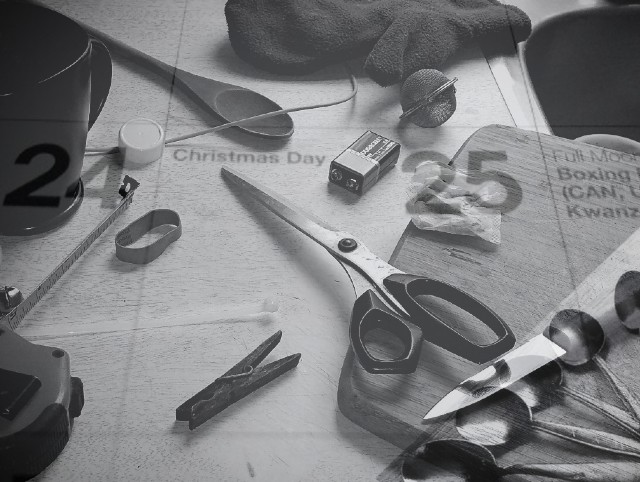
Photograph by Kirsten Jerry.

John’s father, Zechariah, was a priest. He had been chosen to burn incense in the temple of the Lord when an angel told him he and his wife Elizabeth (Mary’s cousin) would have a son. Zachariah didn’t believe the angel since they didn’t any children and were both old. As punishment he was unable to speak until John’s birth.

According to the bible, Mary visited Elizabeth shortly after Jesus’ conception. Elizabeth was six months pregnant. She would’ve conceived John right after Zachariah saw the angel in the temple.

Using the date supposed to be when Zachariah entered the temple, some have calculated John the Baptist was born near the end of June. Catholics believe the exact date is June 24. Adding the six-month difference between Jesus and John and (using June 24) one arrives at December 24 or 25.

CONCLUSION

A Christmas ball on a Christmas tree.
Photograph by Kirsten Jerry.

It may never be clear how we came to celebrate this holiday on December 25.  How Christmas landed on that date is less important than the joy and warmth shared with family and friends in the cold of December.

Design a site like this with WordPress.com
Get started