Making the Bible – Part 2

The Translation

Before I begin, you should know that I am NOT AN EXPERT on manuscripts or biblical history. I am stating the information I found through research. This information is summarized and may require further clarification. Thank you.

The Bible is an ancient book written over thousands of years. Copies are sold today in hundreds of languages. In my last post, I looked into how and when the Bible was written. Today I’m looking into the history of English Bible translations.

VULGATE

Almost as soon as Emperor Constantine had his 50 copies of the Bible made, early church members began translating it into other languages so they could spread the gospel message to as many people as possible.

In the 4th century, Pope Damasus commissioned a scholar known today as St. Jerome to create a new Latin translation of the Bible. Jerome used only the earliest Latin texts and Hebrew or Greek sources to create his translation. It was called the Vulgate.

JOHN WYCLIFFE

John Wycliffe was born in 1320. The Roman Catholic Church held absolute power in the Middle Ages. Wycliffe studied the Bible at Oxford University and learned Latin and Greek. He realized the teachings of The Church and the words of the Bible didn’t match up. As time went on, Wycliffe wanted to make the Bible’s teachings clear.

Fire in a pit. Photograph by Kirsten Jerry.

Wycliffe wanted to translate the Bible so everyone could read it. He and some others finished the translation, known as the Wycliffe Bible, in 1384. The Church was full of rage and declared Wycliffe a heretic in 1415. The kicker? Wycliffe had died in 1384. The Church ordered all copies of his translated Bible burned, and his body dug up and also burned. His ashes were flung into the River Swift. Despite these severe actions copies of the Wycliffe Bible survive today, a magnificent feat considering that each copy was made by hand.

PRINTING PRESS

Mechanisms for printing had been invented in China long before Johann Gutenberg developed his printing press. However, Gutenberg’s innovations were game-changing. In 1455 the Gutenberg Bible became the first full-scale work printed for in Europe with moveable blocks. Soon, printing shops opened in European countries and the Bible could not only be translated but printed and put into the hands of everyday people. Printed Bibles in Latin, Hebrew and Greek were common.

WILLIAM TYNDALE
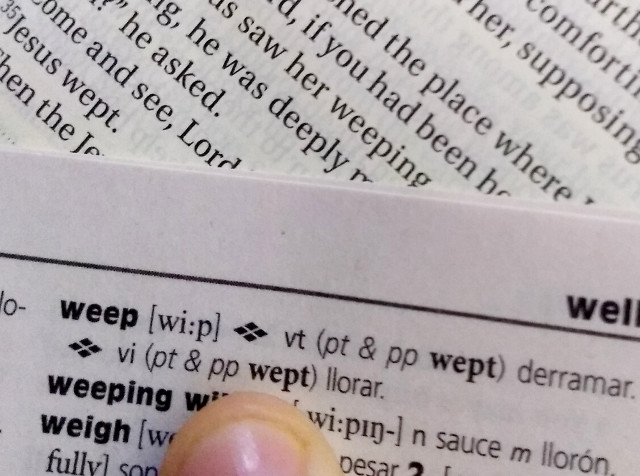
Looking up Spanish for "wept." Photograph by Kirsten Jerry.
Looking up Spanish for “wept.” Photograph by Kirsten Jerry.

William Tyndale was born in 1490. He attended Oxford and Cambridge Universities. Tyndale was good with languages and learned several. He began translating the Bible into English, which was still considered heresy. As a result, Tyndale fled to Germany.

Persecuted and on the run, Tyndale continued his work on the English Bible. He completed a full New Testament in 1526 (later revisions were made) and the Pentateuch in 1530. In 1536, Tyndale was betrayed. Church officials had him strangled to death, then his body burned at the stake for his crimes. The church burned Tyndale’s translations if found. Fortunately, some copies exist today.

THE GREAT BIBLE

In 1538 Henry VIII commanded that every parish should have a copy of the Bible in English, placed somewhere convenient in the church. Because of the sheer size of this Bible, it was called The Great Bible. It was the first authorized Bible. After it came several versions of the English Bible, most of which I don’t have room for in one post.

KING JAMES

Turning Bible pages. GIF by Kirsten Jerry.

When King James I took the English throne, the different denominations were constantly fighting. He called a council where John Reynolds’ suggestion of a new translation was accepted (to simplify a long tale). James appointed 50 scholars of various denominations to work on the translation, which went through vigorous trials to test its accuracy and language. The translation was meant to be understood and accepted by everyone. After many revisions, the King James Version became THE STANDARD for English translations, though other versions of the Bible could still be printed.

MY THOUGHTS

I’m glad I can have the bible in my language today. I still find it surprising how long it took to get an English translation. What surprises you most about the history of the English translation? Let me know in the comments.

CONCLUSION

The Bible has gone through many translations. This ancient book can now be understood and read by people all over the globe. The next time you see a Bible, think about all the hard work that was put into it JUST so we could read it for ourselves.

Making the Bible – Part 1

The Writing

Before I begin, you should know that I am NOT AN EXPERT on manuscripts or biblical history. I am stating the information I found through research. This information is summarized and may require further clarification. Thank you.

The Bible is the best selling book of all time. As a Christian and a book lover, I decided to look into the creation of this book. I soon discovered that this is a VAST topic, so I divided it into two parts – the history of the writings and the history of translations.

THE PENTATEUCH AND OLD TESTAMENT

Open Bible pages. Photograph by Kirsten Jerry.

The Pentateuch or Torah makes up the first 5 books of the Bible. The Jewish prophet Moses wrote these books. The oldest Biblical texts are estimated to have been written around 1400

BC. The remainder of the Old Testament was written over one thousand years.  Credit for these writings belongs to 30 different people (including the Pentateuch).

GREEK

While Alexander the Great was conquering the world, the Hebrews were introduced to Greek. As time went on, Greek was used so frequently the Hebrews lost their language. Due to this shift in language the various writings that would become the Old Testament were written in Greek. These Greek writings would’ve been used by Jesus and the apostles.

NEW TESTAMENT

Psalm pages. Photograph by Kirsten Jerry.

The New Testament took much less time to write than the Old Testament. It was approximately written near the end of the first century AD. It is believed that the coming of Jesus inspired the writers and jump-started the creation of the letters, sermons and so on that began to circulate in the church community.

CONSTANTINE’S COMPLETE BIBLE

When Emperor Constantine converted to Christianity and legalized it in Rome, he began to make changes. Around 330 AD he funded the creation 50 copies of a Bible which included BOTH testaments together. Remember this was before the printing press, and all the books were written out by hand. Constantine’s order may have produced the first complete Bible.

CANON

The Biblical canon is the collection of books chosen to be included in the Bible we use today. Many believe that the biblical canon was decided by one church authority and all the others were stamped out, but this is false. Church leaders came up with three criteria to decide which books belonged in the official canon.

Bible contents page. Photograph by Kirsten Jerry.
  1. Was the book either written by or associated with an apostle?
  2.  Has the book been generally accepted by churches around the world? (Not the fancy of a few churches but accepted by all).
  3. Since false documents are circulating, does the book line up with the teachings that are already accepted?

If all three criteria were met the book was included. Some denominations have different canons, including more books, or having books in different orders. For example, the Roman Catholic Bible has more books in it than the one I use.

This is because Protestants decided not to keep books that were not included in the Hebrew Bible. Catholics decided on their canon at the Council of Trent in 1546. Where the Protestant Bible has 66 books, the Catholic Bible has 73. On top of this, some Protestants include a collection of books known as the Apocrypha bringing the total to 80 books. (P.S. I’m not a Protestant, I simply use the 66-book canon.)

MY THOUGHTS

I always knew the Bible was written by many different people over thousands of years, but the AMOUNT of time was lost on me until now. Yes, thousands of years, but anyone can say that without going into specifics. I suppose that’s why some people don’t trust it.

I don’t have a problem with the Bible as it is, but I understand there are many things people disagree with about it; the canon, for example. What part of the Bible do you think is the most or least accurate? Let me know in the comments. (Please keep in mind that I am not here to start a theological debate).  

CONCLUSION

5 billion copies of the Bible and counting have been sold. It took thousands of years of hard work to write, circulate, and preserve the ancient writings of the Bible. The sheer perseverance it took for the Bible to come into our hands is astonishing! As I mentioned at the beginning of this post, I will be continuing with the topic of the Bible in my next post, where perseverance becomes even more profound.

All about paddles and oars

Much of human history depends upon our ability to travel. Oars and paddles have played a significant role in said history, whether used for a simple canoe, kayak, rowboat or large ships they have helped humans travel and explore. Paddles and oars don’t look like much. However, there is much more to the paddle then meets the eye.

THE DIFFERENCE

Why mention both paddles and oars? Paddles and oars are different from each other. Oars are usually attached to the boat or ship, which means that letting go of an oar doesn’t mean you’ll lose it in the water.

Paddles on the other hand are NOT attached and letting go WILL result in the loss of the paddle. Paddles also come with either one blade (like a canoe paddle) or two (like a kayak paddle). The blade is the long flat part at the end that goes into the water.

THE OLDEST

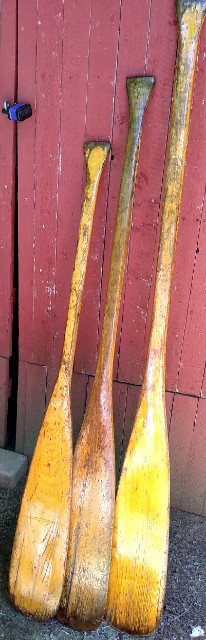
Canoe paddles by a shed. Photograph by Kirsten Jerry.
Canoe paddles. Photograph by Kirsten Jerry.

The oldest boat ever found is the Pesse Canoe which is roughly 10,000 years old. One of the oldest oars ever found, which was discovered in South Korea, is about 7,000 – 7,500 years old. The second-oldest paddle discovered is the Duvensee Paddle found in 1926 in Germany. It was in a dwelling place from the Mesolithic Period.

An older piece of either paddle or oar (my sources disagree on the term) was found at Star Carr. The paddle or oar dated back to the Mesolithic period. Star Carr is in North Yorkshire, England and is one the most important Mesolithic archeological digs. Of course, there may have been older oars or paddles that rotted away before they could be unearthed.

DESIGN IS HARDER THAN IT LOOKS

PADDLES

We’ve come a long way since the Duvensee paddle. Today paddles can be made of aluminum, graphite, plastic, fiberglass or various types of wood. On top of that, there different types of paddles for different uses.

Canoe paddles, for example, have various blades, grips and shafts. The grip is held by the paddler’s upper hand. The other hand low on the shaft which is the long thin handle of the paddle.

Canoe paddles come with two types of grips. One is the T-grip, which looks similar to the letter T, the other is the teardrop shaped palm grip. There are different shapes of blades and shafts come in various lengths. There are also bent shaft paddles that come at different angles. With all of these elements to consider it can be difficult to choose the right paddle.

Canoe on the shore. Photograph by Kirsten Jerry.
OARS

I’ll be focusing on two types of oars. They are rowing oars and sculling oars. What’s the difference between rowing and sculling?

Rowing is when the oar is being used on only one side of the craft, so both the rower’s hands would be on the one oar. (This made me think galley slaves on large ships). Sculling is using two oars to row using one on either side of the craft, with one hand on each oar.

Canoeing on Bird Lake. Photograph by Kirsten Jerry.

The longer of these two types of oars is the rowing oar. Most oars today are made of carbon fiber, instead of wood. Like the canoe paddle, oars come with different shaft lengths and spoon designs. On an oar, the flat part that goes in the water is called a spoon, while rowers often call the oar itself a blade. (Don’t worry I got a bit confused after the canoe paddle blade too).

MY THOUGHTS

I’m not a great canoer, but I love to canoe. I never really thought about the importance of the paddle in history, just its importance in keeping the canoe moving and on track. I didn’t know anything about oars before researching this post and I have to say they’re more interesting than I expected. Which do you think is more interesting, the paddle or the oar? Let me know in the comments!

CONCLUSION

Three canoe paddles. Photograph by Kirsten Jerry.

Without the invention and use of oars and paddles human travel and history would be different. The next time you see or use one of these tools, remember how long we’ve had them. And while you’re at it take a moment to appreciate all the hard work that gets put into designing a useful paddle or oar.

Where did forks come from?

The fork is not as old knives or spoons. This eating utensil helps us keep clean and sanitary while eating. Just think; for a long time, people were eating with their fingers, and who knows how many of them washed first? Yuck! It’s time to find out how forks came to be.

UNWANTED

Old forks. Photograph by Kirsten Jerry.

The oldest forks have been found in Ancient Greece, Rome, and Egypt. They were made from animal bone or wood. However, the fork did not become a popular eating utensil for several centuries.

Early forks were used for preparing and serving food, made with two large prongs instead of four tines like in the forks we use today. Spoons and knives were prominent at mealtimes, but not the fork. Food was scooped with spoons or stabbed with sharp knives and brought to the eater’s mouth.

SCANDAL AND POPULARITY

The success of our hero the fork is in no small part due to the influence of Byzantine and Italian women. The first one I will introduce you to today is Maria Argyropoulina. Argyropoulina was the niece of the Byzantine Emperor. In 1004 she scandalized everyone at her wedding feast when she used a fork instead of her fingers.

You see, she was marrying a Vanetian nobleman and at the time forks were not used for eating in that region. One priest went so far as to condemn her for not using her God-given forks (her fingers) instead of the small, golden, two-pronged instrument.

Old and new forks. Gif by Kirsten Jerry.

When she died of the plague two years later it was said that it was God’s punishment for her use of the fork. This is especially odd (and a touch funny) to me since 1 Samuel 2:13-14 in the Bible mentions the use of forks BY PRIESTS.

Next, I will introduce you to Theodora Doukaina. She was the daughter of the Byzantine Emperor and also married a Venetian nobleman in 1075. Like Argyropoulina, she was condemned for her use of the fork as an eating utensil as well her using napkins, sconce candles and finger bowls. It seems progress was not acceptable.

At last we come to the Italian wife of French King Henry II, Catherine d’Medici. When she married the King, she brought her collection of silver forks with her to France in 1533. Think of Catherine d’Medici as having celebrity status. Her use of the fork made it popular!

Fork in mac n’ cheese. Photograph by Kirsten Jerry.

Where the Byzantine princesses were condemned, d’Medici was praised. It appears as though celebrity endorsement was what the poor fork needed all along! Or perhaps more open minds.

The use of forks as eating utensils began to spread. By the end of the 18th century most of Europe was using forks. The 18th century also brings about the design we are used to today, with revisions being made as time went on. It wasn’t until the end of the American Revolution that the fork was popular in America.

TYPES OF FORKS

There is a fork for every occasion. In fact, there are at least 35 different types of forks, including an ice cream fork. The ice cream fork is similar to a spork but has three large tines instead of four smaller ones. The more common types of forks are plastic forks, dinner forks and salad/dessert forks.

MY THOUGHTS

Since I use a fork for almost all of my meals, it seems strange to me that they didn’t catch on. I think the thing to remember is that eating with forks was a new idea. The finger-eaters were being asked to change how they ate, and it looks like they weren’t happy about it. How would you feel about changing the way you eat? Let me know in the comments!

CONCLUSION

Various forks. Photograph by Kirsten Jerry
Various forks. Photograph by Kirsten Jerry.

Spoons and knives may have been commonly used for longer than the fork, but that doesn’t make it any less important to us today. This humble eating utensil has come from ancient civilizations and ended up beside our plates. With the vast variety of forks to choose from, we’re sure to find the right one for any meal. The next time you use a fork think about what it would be like to eat without one, because for a long time A LOT of people did!

Where did ice cream come from?

There’s nothing quite like ice cream! Whether its store bought or homemade this delicious cold treat is here to stay! Ice cream has had a long journey to get to where it is today. Where did it all begin? In the past of course! Let’s go there now.

ALEXANDER THE GREAT AND NERO

Home made vanilla ice cream. Photograph by Kirsten Jerry.

Alexander the Great enjoyed an icy treat just like you do, but his was very different. He would flavour snow and ice with honey or nectar. Now, this is not a foreign idea for a Canadian like me who’s put maple syrup in the snow. Maybe I should try honey next.

Of course, Alexander the Great wasn’t the only one who knew how great icy treats are. Around 54 – 86 A.D. during the reign of Nero, runners were sent into the mountains to gather ice and snow. The stored snow and ice were then mixed with fruits and juices. This was a pricey undertaking and only the rich could afford it.

TANG DYNASTY

At last milk appears! During the Tang dynasty a cold milk treat was invented. The treat consisted of milk from a cow, goat or buffalo, camphor and flour. The treat would then be frozen in ice or snow. Camphor is a strong-smelling white substance that comes from the camphor tree

SOME THEORIES

Some theories about ice cream are possibly untrue, like the ones about Marco Polo and Catherine de’ Medici. The Marco Polo theory says that the explorer brought a technique for making a sort of ice cream to Italy after traveling to China

This next theory has to do with the origins of gelato. Catherine de’Medici is credited with spreading this dessert through France, then Europe. Supposedly, she held a competition for the strangest dish which was won by a poultry farmer named Ruggieri. He presented an icy, sugary dish with a delicious perfume.

Strawberries and syrup on ice cream. Photograph by Kirsten Jerry.

Also credited with inventing gelato is Bernardo Buontalenti who prepared a bergamot, lemon and orange flavoured cream, chilled by a mix he invented himself. Bergamot is a citrus fruit. However true or untrue these theories are is unclear.

However, it is commonly believed that the Arab community had their own technique for making ice cream. Actually, it was sherbet (or sharabt); quince, pomegranate or cherry flavoured iced drinks. Overtime these drinks were made as desserts and sugar was added, creating sorbet.

FOR THE MASSES

Ice cream maker. Photograph by Kirsten Jerry.

In 1660, ice cream became available for the public. Procopio Cutò, owner of café Procope believed to be the oldest café in Paris, introduced a new recipe. It used frozen milk, eggs, cream, and butter. For this reason, some believe Cutò is the inventor of gelato. (Seriously, I have no idea who actually invented it).

Eventually, ice cream made its way to North America. As refrigeration technology improved, so did the ice cream industry. Ice cream and Ice cream sodas were popular in the late 1800s.

SUNDAE

There are a few theories about the Sundae. In this one, Christians (most likely Puritans) wanted to keep the Sabbath holy, so they set up Blue Laws which prohibited certain secular activities from being done on a Sunday, like selling, buying, or having ice cream sodas.

Checker board ice cream. Photograph by Kirsten Jerry.

The treat was too decadent for Sundays apparently. But Reverend John M. Scott found a way around the laws. By asking Chester C. Platt, of the Platt & Colt Pharmacy, to put the syrup used in making sodas on his ice cream, he opened up new possibilities. The treat was named after the day of its creation; Sunday, later changed to Sundae so religious people would not be offended.

MY THOUGHTS

Whoever invented ice cream/gelato clearly knew a good thing when they tasted it! I am SO glad we have ice cream. Imagine not having ice cream because it’s only for rich people! How would you feel if you couldn’t have ice cream because it was WAY too expensive? Let me know in the comments!

CONCLUSION

Ice cream has changed many times to become the beloved treat we have today. I’m so grateful to its various inventors for making this delicious dessert possible. Next time you have some ice cream, think about how jealous Alexander the Great might be of you!

All about stuffed animals

For as long as I can remember stuffed animals have been a part of my life. (For example, I’ve had Munchie, pictured in my Easter post, my whole life).  Stuffed toys have been loved by children for years now, but for how long exactly? Who decided to make a stuffed animal toy in the first place? Let’s step back in time and find out.

STEIFF AND THE PINCUSHION

In 1877, Margarete Steiff started a successful clothing company. In 1879, she found instructions to make a small stuffed elephant in a magazine and decided to try making it. Margarete sold the elephants as pincushions.

She soon discovered that children were more interested in them, so she began to sell the elephants as toys instead. Later on, Margarete created her own patterns for other stuffed animals. Steiff company animals are celebrated to this day.

TEDDY BEARS

In 1902, President Theodore Roosevelt accepted an invitation to go hunting in Mississippi. Roosevelt’s guide cornered and wounded a bear and tied it to a tree so the President could shoot it. When he arrived, Roosevelt refused because the bear was helpless. Cartoonist Clifford K. Berryman drew a likeness of the event.

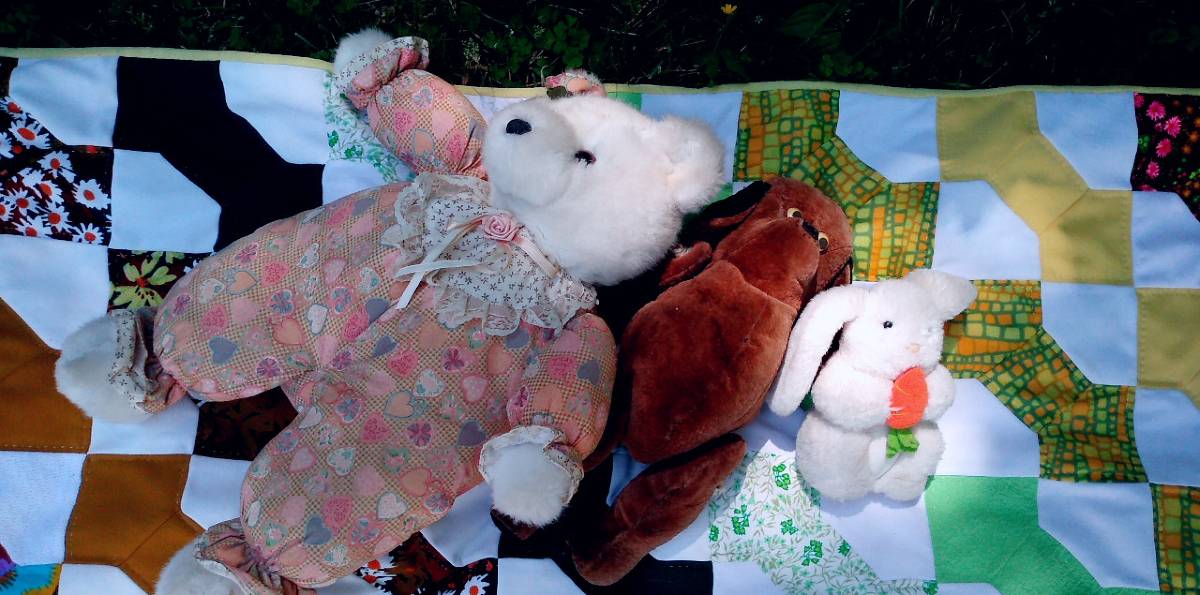
Three teddy Bears on a chair. Photograph by Kirsten Jerry.

It is popularly believed that Morris and Rose Michtom, inspired by the cartoon, got the president’s permission to use his name, then began selling Teddy Bears in their store, but this theory is disputed. It could have been Steiff that made and sold the first Teddy Bears. In any case, stuffed animal sellers began to make the lovable toys.

While you read these next sections, please keep in mind that I’m not an expert or a parent; all the information comes from my research and I encourage you to do some of your own if you have concerns.

THE DOWNSIDE

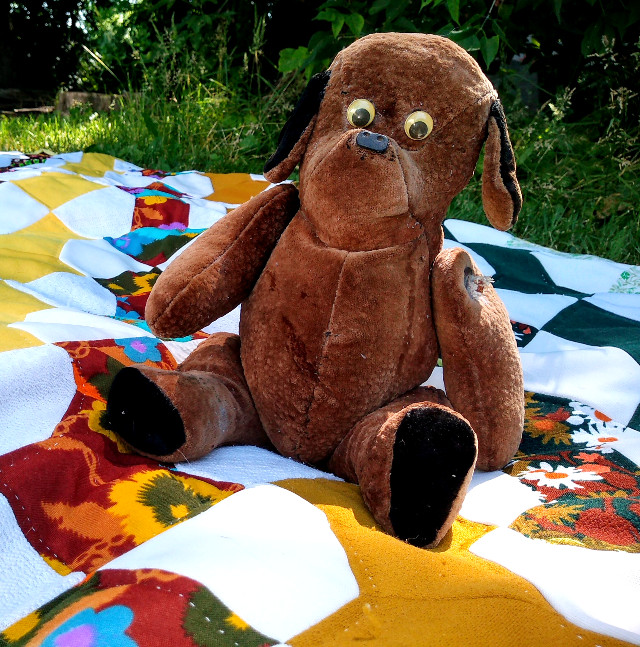
 A stuffed toy dog handmade by my great-grandmother. Photograph by Kirsten Jerry.
A stuffed toy dog handmade by my great-grandmother. Photograph by Kirsten Jerry.

As much I love and recommend stuffed animals, there are a few down sides. First, many stuffed buddies are coated in flame-retardant chemicals. Some of these chemicals are said to disrupt hormones or to cause cancer. Toys made with natural materials or made at home may be safer options.

Second, stuffed toys can be allergens. Dust, dirt and germs can collect on the beloved toys and they should be washed regularly. There are several methods to cleaning a toy that’s not machine washable (I remember cleaning one of mine with an old toothbrush) but it is probably better to find ones that are machine washable.

THE UPSIDE

Stuffed animals can help a child’s development. Toddlers, for example, can gain many skills from such play. Talking out loud to Teddy means toddlers practice speaking. This helps with pronunciation as their vocabulary expands.

 Toddlers can use Stuffed animals to replay social or scary moments, such as being left at daycare, so they can learn how to handle these situations. They can also hit, hug or throw the toy while learning to control emotions. Controlling games played with stuffed toys can help build confidence and creativity. A toddler might begin pretending to be a parent to the toys, practicing parenting skills and making up reasons to punish or reward their “children.”

MY THOUGHTS

This is munchie the bunny (again). I've had him my whole life. Photograph by Kirsten Jerry.
This is munchie the bunny (again). I’ve had him my whole life. Photograph by Kirsten Jerry.

I just LOVE stuffed animals! They’re cute, fluffy and were my best friends growing up. I don’t have kids, so I never thought about chemicals on stuffed animals before. Why would anyone think that’s okay? Sadly, I believe it would be an extremely difficult task to find store-bought toys made without potentially hazardous chemicals today.

I was surrounded by stuffed animals as a child, and I haven’t suffered from having them. I don’t even have allergies. However, I realize that all children are different and what was good for me, might be bad for someone else. How do you feel about chemicals on stuffed toys? Let me know in the comments!

CONCLUSION

It’s hard for me to imagine life without stuffed animals. These cute buddies have an interesting history and help with a child’s development, but some can also be toxic. It’s important to choose carefully and wash regularly. However, I advocate for stuffed animals as faithful childhood friends. Having grown up with stuffed toys I urge you to consider them for your child (or even for yourself) for years of fun, cuteness, and cuddles.

Happy St. Jean Baptiste Day!

If you belong to a francophone community, you are probably already familiar with today’s holiday. If not, then this is your lucky day because I’m going to tell you all about it! St. Jean Baptiste Day is a unique holiday in Canada with a rich history. Over time the holiday transformed from being a pagan celebration, to the feast day of a saint, and finally to celebrating French-Canadian culture each year on June 24 (unless it’s on a Sunday, but I’ll get to that later).

ORIGINS

Today, St. Jean Baptiste Day (St. John the Baptist Day), also known as the Fête nationale du Québec et de la Francophonie canadienn (National holiday of Quebec and the Canadian Francophonie), is a celebration of French-Canadian culture in Quebec and in francophone communities across Canada, but it began very differently.  

Piano keys. Live music is used to celebrate St. Jen Baptiste Day. Photograph by Kirsten Jerry.

It began as a pagan celebration of the summer solstice, or the longest day of the year, around June 21 or 22. As Catholicism spread the celebration was moved to St. John the Baptist’s feast day, June 24, which is estimated to be his birthday.

FUN FACT: In 1908 St. John the Baptist was named the patron saint of French-Canadians!

It was traditional to light a fire in the evening of the saint’s feast day. Colonists from France brought the tradition with them to what is now Canada. The first known mention of the celebration in New France is from 1636.

GROWTH

In 1834 printer-publisher, journalist and strong Patriote political influence, Ludger Duvernay, attended St. Patrick’s Day festivities in Montreal. After seeing how St. Patrick was celebrated, he decided French-Canadians should be given just as much attention.

That year Duvernay helped organize the St. Jean Baptiste Day celebrations. In 1843 he founded Association Saint-Jean-Baptiste de Montréal. From June 1851 to his death in 1852, Duvernay was president of the association.

Bonfires are traditionally used to celebrate the holiday. Gif by Kirsten Jerry.

In 1925, St. Jean Baptiste day became a provincial holiday. Later in 1977, it was declared a national holiday under Quebec premier René Lévesque. The holiday drew away from its religious origins and became a day to celebrate French-Canadian culture.

PUBLIC HOLIDAY

Pile of dishes. Picnics, barbecues and banquets are all ways to celebrate the holiday. Photograph by Kirsten Jerry.

In Quebec, St. Jean Baptiste Day is a public holiday. This means that if their union and employee contracts allow it, employees in Quebec get the day of work. If they can’t get the 24th off for whatever reason, employers have to provide either monetary compensation or give another day off, either before or after the day of the holiday. IF the celebration falls on a Sunday, the holiday is moved to the next day and employees receive June 25th off instead.

CELEBRATIONS

Some celebrations for this holiday begin on the night of June 23. Some events are broadcast online, on television, and on the radio. These celebrations include bonfires, fireworks, picnics, barbecues, live concerts and a parade. Some people celebrate by going to banquets or fun fairs.

MY THOUGHTS

Courtesy of Freerange Stock.Photo illustration by Stuart Miles.

Honestly, I was going to write about Canada Day, since I post bi-weekly and it will come between my posts. Then I realized there was a Canadian holiday I knew very little about and changed my mind. It makes me sad to think that I almost missed celebrating and posting about this holiday. How much did you know about St. Jean Baptiste Day BEFORE reading this post? Let me know in the comments!

Francophone communities and celebrations should not be ignored. Yet, it seems they have been, to the point that St. Jean Baptiste Day was almost a complete mystery to me.  I hope that in reading this post you have learned a little something about these unique people. If there is any information I’ve missed or you have further questions, please let me know.

CONCLUSION

The national holiday of Quebec is a special holiday celebrating French-Canadian culture. If you celebrate this holiday regularly, I hope you’ve enjoyed the read. If not, I hope you’ve learned something about this unique and important holiday. Holidays like St. Jean Baptiste Day should be cherished, not ignored. Whether you would like to celebrate the feast day of a saint or French-Canadian culture or BOTH this holiday is worth observing. Have a happy and safe St. Jean Baptist Day!

Why do we celebrate Father’s Day?

Fathers and father figures are celebrated for their care and love each year on Father’s Day. After writing a post about Mother’s Day I began to wonder about this celebration of fatherhood. This Day did not come about as quickly as Mother’s Day. Father’s Day is a few weeks away and it’s time to find out why it all began.

EARLIEST CELEBRATIONS

Since the Middle Ages the celebration of the Feast of St. Joseph (March 19) has been observed. Joseph was Jesus’ earthly father and Mary’s husband. Fatherhood is among the many things he is patron saint of. The celebration used to be a grand affair, but nowadays it’s commonly observed by setting out alters to honour Joseph.

Grace Golden Clayton is credited with suggesting to her Methodist pastor that a memorial be held to honour the fathers lost the previous December in the Monongah Mining Disaster. Nearly 400 men died in the explosions, many of them fathers. The memorial was held on July 5, 1908 in Fairmont, West Virginia. It was a one-time event.

SONORA SMART DODD

Called the Founder or Mother of Father’s Day, Sonora Smart Dodd was inspired to create a holiday honouring fathers after hearing a sermon on Mother’s Day. Her father was a single father of six children who was a Civil War Veteran. Dodd wanted a special day to honour him, just like mothers were being honoured.

Family photos of Dad with my sister and I when we were little.

On June 19, 1910, Dodd held the first Father’s Day celebration in a YMCA in Spokane, Washington. She continued to lobby for the holiday until she went to the Chicago Art Institute. Her campaign continued when she came home in the 1930’s. Dodd was also a poet and wrote children’s books about the Native Americans in Spokane.

NOTABLE ATTEMPTS

While Sonora Smart Dodd was the driving force behind Father’s Day, others tried to make it official. In 1911 Jane Addams suggested that Father’s Day should be a statewide celebration in Chicago. Her suggestion was rejected.

Dates (years) relevant to Father’s day on a paper. Photograph and writing by Kirsten Jerry.

The next year J.J. Berringer, pastor of a Methodist church, held a Father’s Day celebration. He believed he had held the very first Father’s Day celebration, unaware of the memorial in Fairmont or Dodd’s 1910 event.

In 1915 a member of Lions Club International, Harry C. Meek, claimed he had come up with the idea of Father’s Day and that the third Sunday in June was chosen because it was his birthday. The Club named him the Originator of Father’s Day. Meek fought for Father’s Day to become official.

POLITICAL TIMELINE

It took a much longer time for Father’s Day to catch on than Mother’s Day did. So, here come the highlights!

  • 1924 – U.S. President Calvin Coolidge supported the idea as a national holiday but never issued a national proclamation to make it official.
  • 1950s – Most Americans celebrated Father’s Day, even though it was an unofficial holiday.
  • 1957 – Margaret Chase Smith wrote a letter to Congress pleading them to celebrate BOTH parents and condemning them for only celebrating mothers.
  • 1966 – U.S. President Lyndon B. Johnson issued a presidential proclamation to honour fathers and designated the third Sunday of June as Father’s Day.
  • 1972 – U.S. President Richard Nixon finally made Father’s Day a national holiday.

MY THOUGHTS

Fathers deserve to be celebrated just as much as mothers do. Both of my parents have played an important role in my life. I wouldn’t want my dad to feel like he’s less important to me than my mom is. Do you feel the same way? Let me know in the comments!

Day wrapping materials. Photograph by Kirsten Jerry.

It surprised me to learn that the main force behind Father’s Day being official was a woman. I had expected a son had wanted to honour his father, like a daughter had wanted to honour her mother with Mother’s Day. I had also assumed that it came about naturally after the creation of Mother’s Day, but I was wrong!

CONCLUSION

Father’s Day had to be fought for. This annual celebration of fatherhood is commonplace today, but we should remember that it didn’t always exist. When Father’s Day comes this year, take a moment to remember what it took to create the holiday and, of course, take some time to appreciate Dad.

Who IS that guy anyway?

For as long as I can remember people have been using names of people they didn’t know. These expressions had never been explained to me making me wonder who Mike, Pete, Scott, Sam and Roger were. Well it’s time to find out!

MIKE

The phrase ‘For the love of Mike!’ is a minced oath. This means that it uses Mike to replace a swear word. In this case ‘Mike’ likely replaces ‘God’ in the phrase. Saying ‘For the love of God,’ was considered swearing and for some people still is.

So why Mike? Mike may be a form of Mick or Mickey. If this is true then its origins are a derogatory term for the Irish, stemming from the name Michael. Mick or Mike may target Roman Catholic Irish specifically. With that in mind, perhaps ‘For the love of Mike,’ should be forgotten.

PETE

Pete and other names on a paper. Photograph and writing by Kirsten Jerry.

The similar and more popular phrase ‘For Pete’s sake,’ or ‘For the love of Pete,’ is not as negative. This minced oath replaces ‘For Christ’s sake’ or (once again) ‘For the love of God.’    

There isn’t any solid evidence as to who Pete is, but the theory is that it’s St. Peter or a degradation of ‘Pity’ in ‘For pity’s sake.’  However, like the other names I’m exploring in this post, it could’ve been chosen at random.

SCOTT

Scott and other names on a paper. Photograph and writing by Kirsten Jerry.

Great Scott! it’s another minced oath! In this case ‘Scott’ is replacing ‘God’ in ‘Great God.’ So, who is this Scott anyway?

General Winfield Scott is the most likely candidate. The General led an American army in the Mexican war and was a Union General in the civil war. He was 6 foot 5 inches tall and said to have weighed 300 pounds when he died.

Another possibility is Scottish poet and author Sir Walter Scott. However, since the phrase gained popularity while General Scott was a well-known figure, he is more likely to be the Scott in question.

SAM

Sam and other names on a paper. Photograph and writing by Kirsten Jerry.

Yet another (you guessed it) minced oath using someone’s name is ‘Sam Hill.’ As a minced oath it likely replaces ‘hell’ with ‘hill.’ Who is Sam then? There is one possibility I came across, and no it’s not an actual hill though literal Sam Hills do exist.

Sam Hill fought for the construction paved roads in America, even spending his own money and using his own property as a test site. Hill is credited with building a replica Stonehenge as a war memorial, building the Peace Arch, and founding the Maryhill Museum of Art. Another Sam Hill from Connecticut is believed to have run for office often, perhaps bringing about the extended phrase ‘Run like Sam Hill.’

ROGER

Finally, a phrase that is NOT a minced oath! The phrase ‘Roger that’ or simply ‘Roger’ is an aviation term signifying ‘message received.’ Some sources say Roger means Received Order Given, Expect Results.

Then came the language barrier. Pilots began communicating with other pilots, but they didn’t all speak the same language. ‘Roger’ became part of international aviation communications.

Roger and other names on a paper. Photograph and writing by Kirsten Jerry.

Telegraph operators used the letter ‘R’ to indicate a message was received. When planes were invented, they used paddles to communicate from the ground to the plane. When air-to-ground communications were established, and the technology had developed further pilots used ‘Roger’ for clarification in voice communications.

‘Roger’ was also used in the WW2 U.S. Army/Navy phonetic spelling alphabet. On March 1, 1956, a universal spelling alphabet was put in place. ‘Roger’ was still used for voice communications. The updated phonetic spelling alphabet uses ‘Romeo’ instead of ‘Roger.’

MY THOUGHTS

Mike and other names on a paper. Photograph and writing by Kirsten Jerry.

Well, there are a lot of minced oaths in the world. It’s just as well since people like me don’t really like to swear or, honestly, to listen to it. Maybe don’t use ‘For the love of Mike,’ just in case it really is based on a derogatory term.  Who do you think Mike is? Let me know in the comments!

CONCLUSION

So many names, and so many minced oaths. We may never know for certain who Mike, Pete, Scott, Sam and Roger were but now at least we know the theories (for most of them anyway). Now we can decide if we want to use them or not.

The Meaning of Flowers

This week I’m breaking from the usual format a bit and exploring the meaning behind some flowers. I will be looking into some flowers that my family likes. I decided to do this after researching Mother’s Day because the connection between that holiday and Carnations. That being said, let’s start with Carnations!

CARNATIONS

Carnations have been around for at least 2,000 years and come in a variety of colours, many of which has its own meaning. As mentioned above, I chose this flower because of its ties to Mother’s Day.  The American founder of Mother’s Day, Anna Jarvis chose the carnation as the official flower for the Day, because it was her mother’s favourite flower.

Pink Carnation. Photograph by Kirsten Jerry.
  • Red Carnations indicate love, pride, or admiration.
  • Pink Carnations symbolize a woman’s love or the love of a mother. Wearing a pink Carnation for Mother’s Day meant your mother was alive.
  • To signify pure love or innocence use white Carnations. On Mother’s Day, wearing a white carnation meant your mother had died.
  • Green Carnations are associated with St. Patrick’s Day.

DAFFODILS

Daffodils are always a welcome sight. Your spirits are almost guaranteed to be lifted by their bright yellow petals and fun shape. These spring flowers have more meaning behind them I expected. Some of the many meanings for these blooms include…

A Daffodil. Photograph by Kirsten Jerry.
  • Rebirth, and new beginnings
  • Vitality
  • Creativity
  • Inspiration
  • Memory
  • Forgiveness
  • Awareness and inner reflection

GERBERA DAISIES

Pink Gerbera Daisy. Courtesy of Free Range Stock. Photograph by Eric Yuen.

These cheerful blooms are my sister’s favourite flower. Gerbera Daisies, like so many other flowers, have a new meaning for each colour.

  • Red Gerbera daisies symbolize passion or romantic love
  • Pink daisies signify grace, playful/spontaneous love.  
    • Light pink ones say, ‘get well soon,’ or ‘thank you,’ or indicate admiration.
    • Dark pink Gerbera Daisies can indicate sympathy or concern.
  • White Daisies signify innocence, purity, and perfection.
  • Give purple Gerbera Daisies to someone who is elegant, graceful, refined, or charming. These blooms CAN also indicate romantic interest.

LILACS

Lilacs in a vase. Courtesy of Free Range stock. Photograph by Daria-Yakoleva.

I chose lilacs because we have many misadventures trying to establish a bush. The most memorable one happened just after a tiny plant at last took root. Repairs were being made to the roof when a discarded shingle landed on the tiny plant, crushing it. Lilacs have a pleasing scent and while they don’t come in a s many colour variations as, say, the rose, the colours do vary in their meaning.

  • In general lilacs indicate youthful innocence and confidence.
  • White lilacs signify humility and innocence.
  • Field lilacs symbolize charity.
  • Purple lilacs indicate first love, or a person’s spirituality.

ROSES

Roses are commonly used for romantic purposes. Although I personally like them for their looks alone. These beautiful flowers are difficult to grow around my home, and we’ve had to give them up.

A white rose. Courtesy of Free Range Stock.
  • Red roses mean passion, true love, desire, and romance. They can symbolize bliss in marriages when put in a bridal bouquet.
    • Deep red means you are ready to commit or signify passion.
  • To signify refinement, femininity, elegance, or sweetness use pink Roses.
  • White Roses mean purity, youthfulness, innocence, young love, eternal loyalty, new beginnings, and everlasting love. Sometimes they’re called bridal Roses.
  • Green Roses symbolize rejuvenation of spirit and fertility, richness, or signify times of plenty.

MY THOUGHTS

There are so many different varieties and types of flowers it’s impossible for me to list them all here. Some meanings, like that of the red rose, go without saying, while others were a surprise. I found so many possible meanings for some of the flowers that I had to leave some out!

Mother's Day Bouquet. Photograph by Kirsten Jerry.
Mother’s Day Bouquet. Photograph by Kirsten Jerry.

You might be wondering why I didn’t include my favourite flower. The answer is simple; I don’t have one! I can’t seem to chose which flower is the most beautiful. Do you have a favourite flower? If you do, what is it? Let me know in the comments!

CONCLUSION

Each unique bloom has its own unique meaning. If you need to convey a message without using words, flowers can do the job. Whether it’s for a special occasion, a garden, or ‘just because’ flowers bring extra colour to the everyday. Fair warning though, now that you know what some flowers mean you’ll have to be careful to pick the right ones if you’re giving them away!

Design a site like this with WordPress.com
Get started